- Home
- About Us
- Products
- Plastic Stirring Dryer
- Weighing Baler
- Plastic Crusher
- Waste Shredder Recycling Machine
- Industrial Chiller
- Mold Temperature Machine
- Feeding Conveyor
- Plastic Dryer Machine
- Screening Machine
- Film Granulator
- Other Plastic Auxiliary Equipment
- Extrusion Granulation Automation System
- Complete Automation System for Injection Molding
- Cases
- News
- Download
- Send Inquiry
- Contact Us

What Is a Circular Vibrating Screen and How Does It Improve Material Screening Efficiency
A Circular Vibrating Screen is a highly efficient screening machine widely used in mining, quarrying, construction, metallurgy, and recycling industries. By generating a circular motion, it enables materials to be stratified, separated, and classified with high accuracy and throughput.
This in-depth guide explains how circular vibrating screens work, their core components, advantages over other screening technologies, application scenarios, selection criteria, and maintenance best practices. Whether you are optimizing an existing production line or planning a new project, this article will help you make informed decisions while aligning with modern efficiency and sustainability requirements.
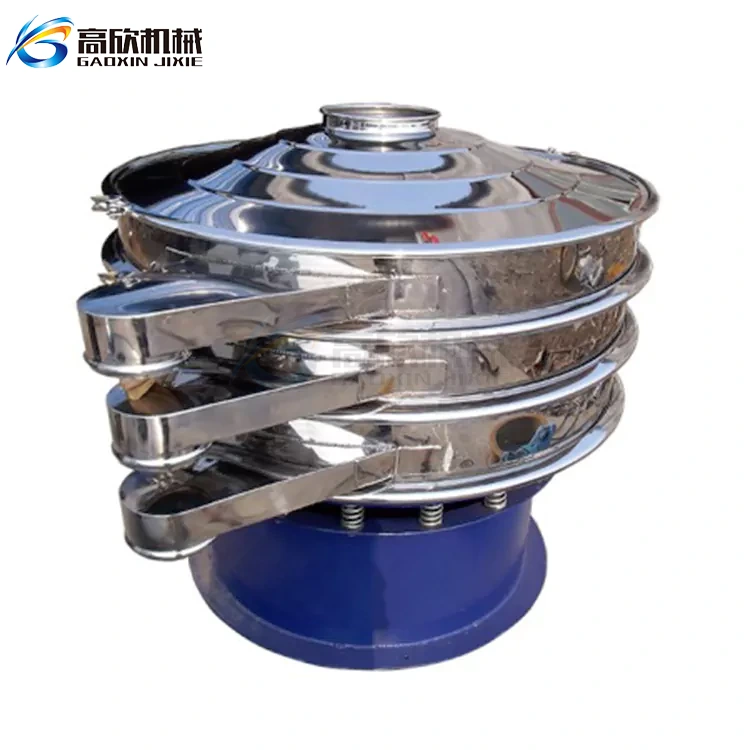
Table of Contents
- 1. What Is a Circular Vibrating Screen?
- 2. How Does a Circular Vibrating Screen Work?
- 3. Key Components of a Circular Vibrating Screen
- 4. How Circular Vibrating Screens Improve Screening Efficiency
- 5. Industrial Applications
- 6. Circular vs Linear Vibrating Screens
- 7. How to Choose the Right Circular Vibrating Screen
- 8. Maintenance and Optimization Tips
- 9. Frequently Asked Questions
1. What Is a Circular Vibrating Screen?
A circular vibrating screen is a mechanical screening device that uses an unbalanced vibrating motor or exciter to generate circular motion on the screen surface. This motion causes materials to move in a spiral trajectory, enabling efficient stratification and separation by particle size.
Unlike linear vibrating screens, circular vibrating screens are particularly effective for handling bulk materials with varying particle sizes and moisture levels. They are commonly used for grading, scalping, and dewatering operations.
Manufacturers like GAOXIN design circular vibrating screens to meet demanding industrial standards, ensuring durability, reliability, and consistent screening performance across diverse operating conditions.
2. How Does a Circular Vibrating Screen Work?
The working principle of a circular vibrating screen is based on centrifugal force generated by an eccentric block or shaft. When the vibration motor rotates, it produces a circular vibration trajectory on the screen deck.
Key Working Steps
- Material is fed evenly onto the screen surface.
- Circular vibration causes particles to spread and stratify.
- Smaller particles pass through the screen apertures.
- Larger particles move toward the discharge outlet.
This process ensures high screening accuracy while maintaining a continuous material flow, making it suitable for high-capacity production lines.
3. Key Components of a Circular Vibrating Screen
| Component | Function |
|---|---|
| Screen Frame | Provides structural support and stability |
| Vibration Motor / Exciter | Generates circular vibration force |
| Screen Mesh | Separates materials by size |
| Spring System | Absorbs vibration and reduces stress |
| Drive System | Transfers power to the vibrating mechanism |
4. How Circular Vibrating Screens Improve Screening Efficiency
- High Stratification Efficiency: Circular motion promotes better layering of materials.
- Large Processing Capacity: Suitable for continuous and high-throughput operations.
- Reduced Screen Blinding: Optimized vibration minimizes clogging.
- Adaptability: Handles dry, wet, fine, and coarse materials.
Compared to traditional screening methods, circular vibrating screens offer a balanced combination of efficiency, accuracy, and durability, helping operators reduce operational costs while increasing output quality.
5. Industrial Applications
Circular vibrating screens are widely used in:
- Mining and mineral processing
- Sand and aggregate production
- Coal preparation plants
- Metallurgical industries
- Construction waste recycling
- Chemical and fertilizer processing
For example, in aggregate plants, circular vibrating screens efficiently classify crushed stone into different size grades, improving downstream processing efficiency.
6. Circular vs Linear Vibrating Screens
| Aspect | Circular Vibrating Screen | Linear Vibrating Screen |
|---|---|---|
| Motion Type | Circular | Linear |
| Material Adaptability | High | Moderate |
| Screening Accuracy | Excellent | Good |
| Maintenance | Low | Moderate |
7. How to Choose the Right Circular Vibrating Screen
When selecting a circular vibrating screen, consider the following factors:
- Material characteristics (size, moisture, density)
- Required screening capacity
- Number of screening layers
- Installation space and layout
- Energy efficiency and operating costs
Working with experienced manufacturers such as GAOXIN ensures customized solutions that align with your production goals and industry standards.
8. Maintenance and Optimization Tips
- Inspect screen mesh regularly for wear or damage
- Ensure bolts and fasteners are properly tightened
- Lubricate bearings according to manufacturer guidelines
- Monitor vibration amplitude and noise levels
Proper maintenance not only extends equipment lifespan but also ensures stable and efficient screening performance.
9. Frequently Asked Questions (FAQ)
Q1: What materials are best suited for circular vibrating screens?
Circular vibrating screens are ideal for aggregates, ores, coal, sand, gravel, and other bulk materials with varying particle sizes.
Q2: Can circular vibrating screens handle wet materials?
Yes. With proper screen mesh selection and vibration parameters, they can effectively process wet or sticky materials.
Q3: How long does a circular vibrating screen last?
With proper maintenance, a high-quality circular vibrating screen can operate reliably for many years.
Q4: Are circular vibrating screens energy-efficient?
Modern designs optimize vibration efficiency, reducing power consumption while maintaining high throughput.
Conclusion
A circular vibrating screen is a critical component in modern material processing systems, offering superior efficiency, reliability, and versatility. By understanding its working principles, advantages, and selection criteria, businesses can significantly enhance their screening operations.
If you are looking for a high-performance circular vibrating screen solution tailored to your industry needs, GAOXIN provides professional support and advanced equipment design. Contact us today to explore how we can help optimize your production line and maximize operational efficiency.
Related News
- Smart Conveying, Empowering Efficient Production - Your Dedicated Screw Conveyor Solutions Expert
- Turning waste into treasure, turning stone into gold—opening a new era of profitability and green development for PET recycling.
- Vertical Plastic Mixers: Empowering Precision Mixing, Setting a New Benchmark in Intelligent Plastic Manufacturing
- Reclaim the value of your plastic waste with the Gaoxin Plastic Shredder—the ultimate solution for efficient recycling
- Weighing Baler: How It Works and Why It Matters for Modern Recycling Operations
- Waste Shredder Recycling Machine: A Practical Selection & Implementation Guide — From Principle to On-Site Solutions
Leave me a message