- Home
- About Us
- Products
- Plastic Stirring Dryer
- Weighing Baler
- Plastic Crusher
- Waste Shredder Recycling Machine
- Industrial Chiller
- Mold Temperature Machine
- Feeding Conveyor
- Plastic Dryer Machine
- Screening Machine
- Film Granulator
- Other Plastic Auxiliary Equipment
- Extrusion Granulation Automation System
- Complete Automation System for Injection Molding
- Cases
- News
- Download
- Send Inquiry
- Contact Us

What Is a Loss-In-Weight Scale and How Does It Ensure Accurate Continuous Feeding
A Loss-In-Weight Scale is a highly precise industrial weighing and feeding system designed to measure material flow by continuously monitoring weight reduction over time. Widely used in plastics, chemicals, food processing, and pharmaceutical industries, this technology ensures stable, accurate, and repeatable dosing. This article explores how loss-in-weight scales work, their advantages, applications, selection criteria, and why manufacturers like Gaoxin are trusted partners for advanced weighing solutions.
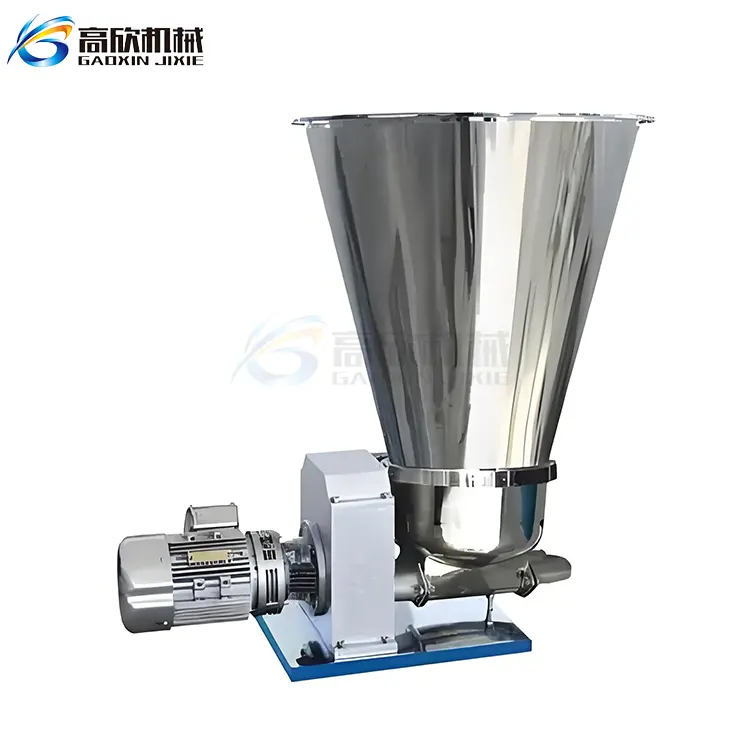
Table of Contents
- 1. What Is a Loss-In-Weight Scale?
- 2. How Does a Loss-In-Weight Scale Work?
- 3. Key Components of a Loss-In-Weight Scale
- 4. Loss-In-Weight Scale vs. Gain-In-Weight Systems
- 5. Major Applications of Loss-In-Weight Scales
- 6. Benefits of Using a Loss-In-Weight Scale
- 7. How to Choose the Right Loss-In-Weight Scale
- 8. Accuracy Factors and Calibration Tips
- 9. Why Choose Gaoxin Loss-In-Weight Scale Solutions?
- 10. Frequently Asked Questions (FAQ)
1. What Is a Loss-In-Weight Scale?
A Loss-In-Weight Scale is a gravimetric feeding device that calculates material flow rate by measuring the reduction in weight of a hopper or container over a specific period of time. Unlike volumetric feeders, it provides real-time mass-based accuracy, making it ideal for applications where precision is critical.
As material is discharged from the hopper, load cells continuously detect weight loss. The control system then converts this data into a precise feed rate, ensuring consistent material delivery even when bulk density changes.
2. How Does a Loss-In-Weight Scale Work?
The operating principle of a loss-in-weight scale is based on continuous weight monitoring. Instead of measuring how much material enters a system, it focuses on how much material leaves the hopper.
- The hopper is filled with raw material.
- Load cells measure the total weight.
- Material is discharged at a controlled speed.
- The system calculates weight loss per unit time.
- The controller adjusts feeder speed to maintain accuracy.
This closed-loop control mechanism allows the system to respond instantly to process variations, ensuring stable continuous feeding.
3. Key Components of a Loss-In-Weight Scale
| Component | Function |
|---|---|
| Load Cells | Measure real-time weight changes with high precision |
| Hopper | Stores and releases material |
| Feeder (Screw/Belt) | Controls material discharge rate |
| Controller | Calculates feed rate and adjusts output |
| Frame & Isolation System | Minimizes vibration and environmental interference |
4. Loss-In-Weight Scale vs. Gain-In-Weight Systems
| Feature | Loss-In-Weight Scale | Gain-In-Weight System |
|---|---|---|
| Measurement Method | Weight decrease over time | Weight increase over time |
| Feeding Mode | Continuous | Batch-based |
| Accuracy | Very high | Moderate to high |
| Best Use Case | Continuous production lines | Batch processing |
5. Major Applications of Loss-In-Weight Scales
- Plastic extrusion and compounding
- Chemical powder dosing
- Food and beverage ingredient feeding
- Pharmaceutical production
- Battery and new energy material processing
These systems are particularly effective where material consistency directly affects product quality.
6. Benefits of Using a Loss-In-Weight Scale
- High feeding accuracy (±0.1% or better)
- Automatic compensation for bulk density changes
- Reduced material waste
- Improved product consistency
- Lower long-term operating costs
7. How to Choose the Right Loss-In-Weight Scale
When selecting a loss-in-weight scale, consider the following factors:
- Material characteristics (powder, granule, pellet)
- Required feeding accuracy
- Environmental conditions
- Integration with existing control systems
- Supplier technical support and customization ability
Manufacturers like Gaoxin offer tailored solutions that meet diverse industrial requirements.
8. Accuracy Factors and Calibration Tips
Several factors can influence system accuracy:
- Vibration and airflow interference
- Material flow consistency
- Load cell quality
- Calibration frequency
Regular calibration, proper installation, and environmental isolation are key to maintaining long-term performance.
9. Why Choose Gaoxin Loss-In-Weight Scale Solutions?
Gaoxin specializes in advanced loss-in-weight scale systems designed for reliability, precision, and industrial durability. With years of engineering experience, Gaoxin provides:
- Customized system design
- High-quality load cells and controllers
- Stable long-term accuracy
- Professional technical support
By integrating Gaoxin solutions, manufacturers can achieve superior process control and operational efficiency.
10. Frequently Asked Questions (FAQ)
Q1: Is a loss-in-weight scale suitable for continuous production?
Yes. Loss-in-weight scales are specifically designed for continuous feeding applications requiring high accuracy.
Q2: Can it handle different types of materials?
Yes. With proper feeder selection, loss-in-weight scales can handle powders, granules, and pellets.
Q3: How often should calibration be performed?
Calibration frequency depends on usage and environment, but routine checks are recommended for optimal accuracy.
Q4: What industries benefit most from loss-in-weight scales?
Industries such as plastics, chemicals, food processing, and pharmaceuticals benefit significantly from this technology.
If you are looking to improve feeding accuracy and process stability, Gaoxin loss-in-weight scale solutions are engineered to meet demanding industrial standards. Contact us today to learn how we can support your production goals.
Related News
- Smart Conveying, Empowering Efficient Production - Your Dedicated Screw Conveyor Solutions Expert
- Turning waste into treasure, turning stone into gold—opening a new era of profitability and green development for PET recycling.
- Vertical Plastic Mixers: Empowering Precision Mixing, Setting a New Benchmark in Intelligent Plastic Manufacturing
- Reclaim the value of your plastic waste with the Gaoxin Plastic Shredder—the ultimate solution for efficient recycling
- Weighing Baler: How It Works and Why It Matters for Modern Recycling Operations
- Waste Shredder Recycling Machine: A Practical Selection & Implementation Guide — From Principle to On-Site Solutions
Leave me a message