- Home
- About Us
- Products
- Plastic Stirring Dryer
- Weighing Baler
- Plastic Crusher
- Waste Shredder Recycling Machine
- Industrial Chiller
- Mold Temperature Machine
- Feeding Conveyor
- Plastic Dryer Machine
- Screening Machine
- Film Granulator
- Other Plastic Auxiliary Equipment
- Extrusion Granulation Automation System
- Complete Automation System for Injection Molding
- Cases
- News
- Download
- Send Inquiry
- Contact Us

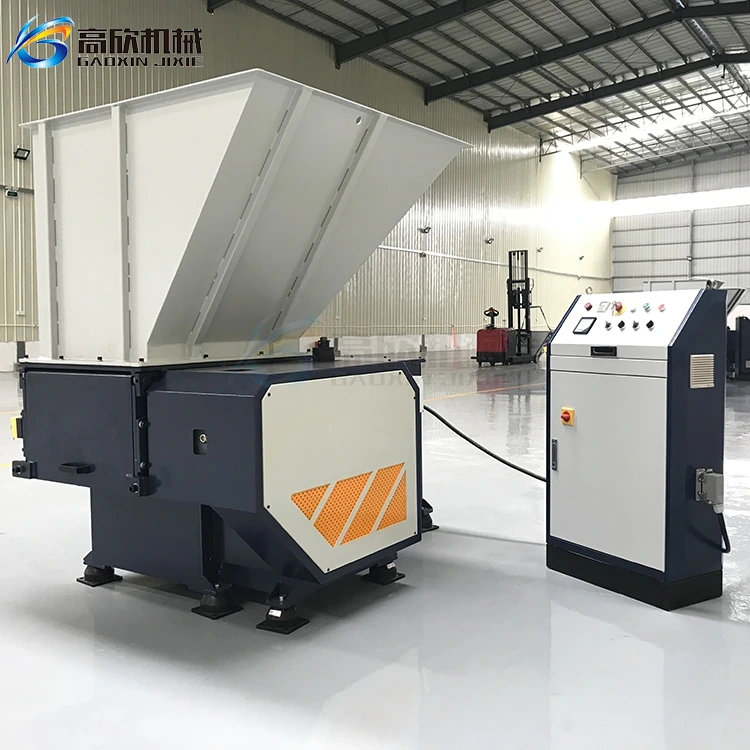
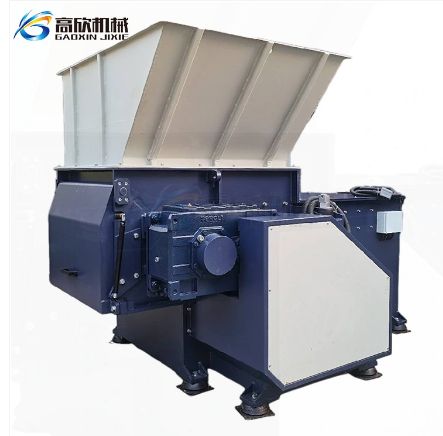
Waste Shredder Recycling Machine: A Practical Selection & Implementation Guide — From Principle to On-Site Solutions
If you get the first step wrong in selecting a waste shredder, the rest of your recycling line will be bottlenecked from day one. Many plants end up with either inadequate throughput or frequent blade breakage — the root cause is almost always a mismatch between material characteristics and machine specifications. This article lays out the selection logic, real-world parameters, and the most common pitfalls so you can get it right the first time.
What Exactly Is a Shredder — and How Is It Different from a Granulator?
A lot of people use the terms shredder and granulator interchangeably. That is a costly misunderstanding.
A shredder runs at low speed (typically 20–80 RPM) with high torque. It is designed to handle bulky, oversized, and heterogeneous feedstocks — think whole bales of PET bottles, large HDPE drums, or car bumpers. It does not require clean input; it can even tolerate nails, stones, and other contaminants mixed in. The shredder's job is primary size reduction, taking material down to 30–150 mm chunks.
A granulator, by contrast, runs at high speed with sharp cutting knives. It requires a relatively uniform, pre-sized input and produces much finer particles that can go directly into pelletizing or extrusion. A granulator belongs downstream of the shredding stage.
A simple rule of thumb: the shredder is the "pathfinder"; the granulator is the "finishing tool."
Which of the Three Main Shredder Types Should You Choose?
The three most common configurations on the market are single-shaft, twin-shaft, and four-shaft shredders. Choosing the wrong type is one of the most frequent — and expensive — mistakes in the industry.
| Machine Type | Working Principle | Suitable Materials | Throughput Range | Price Range (USD) |
|---|---|---|---|---|
| Single-Shaft | One rotating shaft; output size controlled by a bottom screen | Films, woven bags, PET bottles, injection molding sprues | 200–2,000 kg/h | $10,000–40,000 |
| Twin-Shaft | Two counter-rotating shafts; shearing and tearing action | HDPE drums, PVC pipes, car bumpers, mixed rigid plastics | 500–5,000 kg/h | $25,000–80,000 |
| Four-Shaft | Four shafts with two-stage shearing; more uniform output | Mixed municipal solid waste (MSW), RDF/SRF preparation | 1,000–10,000+ kg/h | $60,000–250,000+ |
Selection Guidelines:
Lightweight, relatively clean materials (e.g., packaging films, bottles) → Single-shaft is sufficient, cost-effective, and gives good output size control.Thick, rigid, or mixed industrial waste (containing minor metals) → Twin-shaft — higher torque, better shock resistance.
Complex material composition, high purity requirements, or feeding into optical sorters / RDF production lines → Four-shaft — ensures consistent output uniformity in one pass.
Real-World Parameters for Twin-Shaft Shredders (Chinese-made equipment):
| Model | Power (kW) | Shredding Chamber (mm) | Throughput (kg/h) | Net Weight (kg) |
|---|---|---|---|---|
| RSCF612 | 45+45 | 1220×650 | 5,000–10,000 | 7,000 |
| RSC812 | 75+75 | 1220×800 | 10,000–20,000 | 10,000 |
| RSC912 | 90+90 | 1220×900 | 20,000–25,000 | 11,500 |
| RSC1016 | 110+110 | 1600×1000 | 30,000–50,000 | 13,000 |
Important: These are upper-bound capacities. Actual throughput depends heavily on the material — we will cover how to calculate real-world output later.
The Most Overlooked Step: Front-End Pre-Treatment
Many plant owners assume a shredder can "eat anything" and simply dump raw waste straight in. The result? Frequent jams, broken blades, and unplanned downtime.
Feeding raw, untreated waste directly into a shredder is the fastest way to damage cutters and cause severe blockages.
A properly designed pre-treatment line should include:
-
Bag opener — Whole bags wrapped around the shaft will stall the machine; bags must be ruptured and degassed first.
-
Trommel screen (80–150 mm aperture) — Removes fine grit, sand, and organics that do not need shredding, reducing shredder load by 15–30%.
-
Overband magnetic separator — Nails, screws, and iron scraps can destroy blades within hours; a suspended magnet must pull them out before the shredder.
-
Manual / optical sorting stations — Remove hazardous items like gas cylinders, batteries, and large glass pieces that can cause catastrophic damage.
For relatively clean industrial scrap (e.g., production off-cuts), pre-treatment is simpler: sort by resin type (PET vs. HDPE vs. PP). If the goal is RDF fuel production, mixed-stream feeding is acceptable.
The Real Throughput — Don't Be Fooled by Nameplate Numbers
The throughput printed on a machine's nameplate is measured under ideal conditions — clean HDPE flakes, continuous feeding, zero interruptions. In real-world operations, with contaminants, density fluctuations, and moisture content, actual output is often half or even less of the claimed figure.
A Practical Two-Step Throughput Calculation:
Step 1 — Apply a Material Hardness Index (MHI) factor:
-
Clean PET / HDPE bottles → factor 0.80–0.90
-
Mixed rigid plastics → factor 0.60–0.70
-
Contaminated municipal mixed plastics → factor 0.45–0.60
Step 2 — Apply a System Efficiency Coefficient (SEC), typically 0.70–0.85:
Actual Output = Nameplate Capacity × MHI × SEC
Example: A machine rated at 2,000 kg/h processing mixed rigid plastics (MHI = 0.65) with continuous operation efficiency (SEC = 0.75):
- 2,000 × 0.65 × 0.75 = 975 kg/h
This means if you plan for 15 tons per day (two 8-hour shifts), the theoretical nameplate capacity required is at least ~2,000 kg/h. Buying a machine rated at 1,000 kg/h based on its label would leave your entire line underfed.
Golden rule: Always size up by at least one tier. An undersized shredder becomes the bottleneck for the whole plant. Going one step larger adds marginal cost but gives you a safety margin that pays for itself in operational flexibility.
Maintenance Cost Is the Real Expense
Purchasing the machine is just the beginning. The total cost of ownership (TCO) is determined by blade life, serviceability, and supplier responsiveness.
The Truth About Blade Wear
A shredder is essentially a "giant pair of scissors" — it cuts by shearing force, not grinding. Once the cutting edges dull, the machine stops cutting and starts tearing and crushing the material. Throughput plummets, energy consumption spikes, and the main motor bears excessive strain.
Blade life varies dramatically by material: the same shredder processing mixed plastics might need blade replacement once a year, while shredding tires could require it every month.
Key considerations:
-
Blade material — D2 tool steel costs more upfront but lasts 2–3× longer than standard carbon steel blades in abrasive applications.
-
Budget for blade replacement every 800–1,500 operating hours when processing contaminated or abrasive feedstocks.
What to Look for in a Supplier
A reliable supplier should provide:
-
A clear blade material specification and hardness rating (typically 58–62 HRC for D2-grade steel)
-
Readily available replacement parts with documented lead times
-
Installation guidance and on-site commissioning support
-
Technical documentation, including electrical schematics and maintenance manuals
Do not overlook the total cost equation. A machine that costs 20% less upfront but has 50% shorter blade life and a 6-week lead time for spares will end up costing far more within the first two years of operation.
A Practical Pre-Purchase Checklist
Answer these six questions before making any decision — they cover 80% of the selection risk:
-
How many tons do you need to process per day or per week? — Determines the capacity tier.
-
What is the material composition? What percentage is film? Rigid chunks? Moisture content? Any metal contamination? — Determines the machine type.
-
What is the required output particle size? Downstream use — pelletizing, optical sorting, or RDF fuel production? — Determines screen size.
-
How much floor space is available? The shredder plus infeed/outfeed conveyors takes up significantly more room than the machine footprint alone.
-
Is after-sales support and spare parts supply reliable? Does the supplier have a local parts warehouse? What is the cost of one day of downtime while waiting for spares?
-
Does the budget include installation and commissioning? Set aside an additional 10–15% of the machine price for installation and integration, especially when connecting to existing conveyor and sorting systems.
Selecting a waste shredder is not about picking a machine off a spec sheet. It is about systematically aligning material characteristics, real throughput requirements, line integration, and long-term maintenance costs with the equipment choice. The specification table is a tool, not the answer. Investing time upfront to get the homework right will save you far more in maintenance costs and lost production time than the price difference between equipment options.
Related News
- Smart Conveying, Empowering Efficient Production - Your Dedicated Screw Conveyor Solutions Expert
- Turning waste into treasure, turning stone into gold—opening a new era of profitability and green development for PET recycling.
- Vertical Plastic Mixers: Empowering Precision Mixing, Setting a New Benchmark in Intelligent Plastic Manufacturing
- Reclaim the value of your plastic waste with the Gaoxin Plastic Shredder—the ultimate solution for efficient recycling
- Weighing Baler: How It Works and Why It Matters for Modern Recycling Operations
- Horizontal Mixing Mixer: A Practical Guide to Design, Applications, and Market Trends
Leave me a message