- Home
- About Us
- Products
- Plastic Stirring Dryer
- Weighing Baler
- Plastic Crusher
- Waste Shredder Recycling Machine
- Industrial Chiller
- Mold Temperature Machine
- Feeding Conveyor
- Plastic Dryer Machine
- Screening Machine
- Film Granulator
- Other Plastic Auxiliary Equipment
- Extrusion Granulation Automation System
- Complete Automation System for Injection Molding
- Cases
- News
- Download
- Send Inquiry
- Contact Us

Horizontal Mixing Mixer: A Practical Guide to Design, Applications, and Market Trends
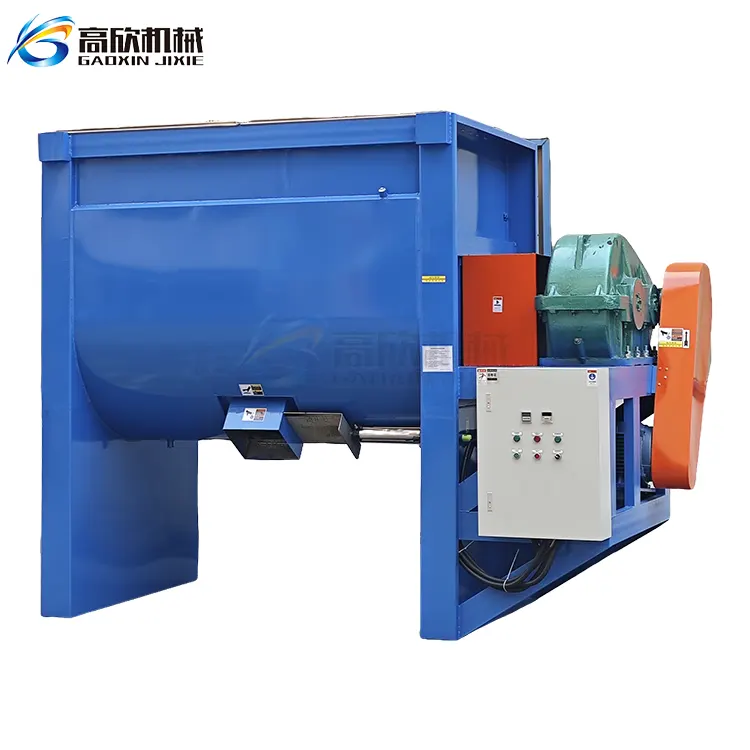
The Horizontal Mixing Mixer has become an indispensable asset in industrial powder and bulk solids processing. Its ability to deliver consistent, high-quality blends across diverse industries—from food and pharmaceuticals to chemicals and new energy—makes it a critical piece of equipment for any production line. This article provides a practical overview of its core technology, key applications, selection criteria, and the latest market developments.
Core Technology and Design Features
The performance and reliability of a Horizontal Mixing Mixer depend heavily on its core design elements. The three most important factors are agitator design, shaft construction, and sealing technology.
Agitator Types
Different agitator configurations are suited to different mixing tasks:
-
Paddle Agitators: These create a unique "figure-8" flow pattern by lifting, throwing, and folding the material. This action provides a gentle yet thorough mix, making it ideal for products with varying particle sizes, densities, and viscosities. The design also facilitates easy cleaning between batches.
-
Double-Ribbon Agitators: Featuring inner and outer helical ribbons that are 180 degrees out of phase, this design moves material in opposite directions simultaneously. The inner ribbon pushes material toward one end while the outer ribbon pulls it back, creating an end-to-end convective mixing action. This results in rapid and homogeneous blends, particularly for free-flowing powders.
-
Plowshare / Plow-Blade Agitators: Mounted on the central shaft, these plough-shaped tools generate both convective flow and high-intensity shear. They are especially effective for applications requiring high dispersion, such as mixing pigments or incorporating small amounts of liquid into dry powders.
Shaft Design
The main shaft is the backbone of any Horizontal Mixing Mixer. Solid, one-piece forged shaft construction is a mark of quality. This design minimizes stress concentration points and reduces deflection (bending) under heavy loads, significantly lowering the risk of metal fatigue and shaft fracture over the equipment's lifetime.
Sealing Technology
Preventing material leakage and cross-contamination is critical, especially in hygienic industries. While traditional packing seals are still used, advanced composite lip seals are gaining popularity. These seals are non-porous, wear-resistant, and easy to clean. Moreover, they are compliant with FDA and 3-A sanitary standards, making them the preferred choice for food and pharmaceutical applications.
Practical Applications Across Industries
The versatility of the Horizontal Mixing Mixer has driven its adoption into a wide spectrum of applications.
1. New Energy and High-Value Materials
With the explosive growth of the electric vehicle (EV) market, the mixing of lithium battery cathode and anode materials has become a major new growth area. Horizontal Mixing Mixers designed for this sector require superior uniformity and shorter cycle times. Some models are even engineered to operate reliably at elevated temperatures (e.g., 350–650°C) for specialized material treatments.
2. Large-Scale Food Production
In commercial bakeries, the Horizontal Mixing Mixer offers distinct advantages over traditional spiral or vertical mixers for dough preparation. Its jacketed bowl design allows for precise temperature control via chilled water circulation. This is critical for recipes that demand low-temperature, slow mixing or specific fermentation profiles, ensuring batch-to-batch consistency at scale.
3. Animal Feed and TMR (Total Mixed Ration)
In the livestock industry, horizontal TMR mixers are used to blend forage, silage, grains, and supplements. The Horizontal Mixing Mixer excels at handling high-moisture ingredients like corn silage and fresh grass. It mixes quickly but care must be taken to avoid over-mixing, which can chop fibrous materials too finely. For rations with a high proportion of dry hay, pre-chopping is recommended.
How to Choose the Right Horizontal Mixing Mixer
Selecting the appropriate equipment requires a thorough evaluation of several factors:
| Factor | Key Questions to Ask |
|---|---|
| Material Properties | Is it a powder, granule, or paste? Is it fragile, abrasive, or sticky? |
| Process Objective | Is it just blending, or do you need coating, wetting, or chemical reaction? |
| Batch Size / Throughput | What is your production capacity requirement per hour or per shift? |
| Sanitation & Cleaning | Is the design easy to clean? Are there dead spots? Does it meet GMP/FDA standards? |
Global Market Outlook
The global market for horizontal mixing equipment—including paddle, ribbon, and plowshare types—was valued at approximately $1.87 billion in 2025**. It is projected to reach **$3.41 billion by 2034, growing at a compound annual growth rate (CAGR) of 6.2%, according to industry reports.
Key growth drivers include:
-
Stringent quality and hygiene regulations in food and pharmaceutical sectors.
-
Rising investment in food processing and pharmaceutical infrastructure in emerging economies (Southeast Asia, Africa).
-
Industry 4.0 integration, with growing demand for smart Horizontal Mixing Mixers equipped with sensors and remote monitoring capabilities.
The Horizontal Mixing Mixer is a mature yet continuously innovating piece of equipment. Its core value lies in its ability to deliver efficient, uniform, and repeatable mixing results. Future developments are focused on energy efficiency, intelligent process control, and specialized solutions for high-growth industries such as lithium batteries and alternative proteins.
For buyers and engineers, a deep understanding of your specific process requirements—coupled with knowledge of the critical design parameters outlined above—is the foundation for making a sound investment and ensuring long-term operational success with your Horizontal Mixing Mixer.
Related News
- Smart Conveying, Empowering Efficient Production - Your Dedicated Screw Conveyor Solutions Expert
- Turning waste into treasure, turning stone into gold—opening a new era of profitability and green development for PET recycling.
- Vertical Plastic Mixers: Empowering Precision Mixing, Setting a New Benchmark in Intelligent Plastic Manufacturing
- Reclaim the value of your plastic waste with the Gaoxin Plastic Shredder—the ultimate solution for efficient recycling
- Weighing Baler: How It Works and Why It Matters for Modern Recycling Operations
- Waste Shredder Recycling Machine: A Practical Selection & Implementation Guide — From Principle to On-Site Solutions
Leave me a message